A new appreciation not only for the Seven Species of Eretz Yisrael, but for all the Land’s bounty
What do you associate with Tu B’Shevat? As soon as I hear the word, I think of bokser, those long, black, shriveled carob sticks my school would put in our Tu B’Shevat baggies. No one really wanted to eat them, though, and although they’re not part of the Shivas Haminim — the seven species for which Eretz Yisrael is praised (wheat, barley, grapes, figs, pomegranates, olives, and dates) — those bokser snacks have an illustrious history in the Holy Land. When Rabi Shimon Bar Yochai, author of the Zohar, hid from the Romans in a cave for 13 years, he was sustained by a carob tree. And so, as mysticism and bokser go way back, what better place to begin our Tu B’Shevat tour than the Upper Galilee village of Peki’in, the traditional site of Rabi Shimon’s hideout cave?
Peki’in, today a mixed Christian, Muslim, and Druze village, has the distinction of being the only Jewish city with contiguous Jewish settlement from the period of the Second Beis Hamikdash until the present. Unlike Jerusalem and other cities where Jews had been expelled and banned from living, there was always a Jewish religious presence in Peki’in. Today, Margalit Zinati, 91, is the guardian of the ancient synagogue and the last remaining Jew in Peki’in, a member of a Jewish family who has lived in the village for centuries.
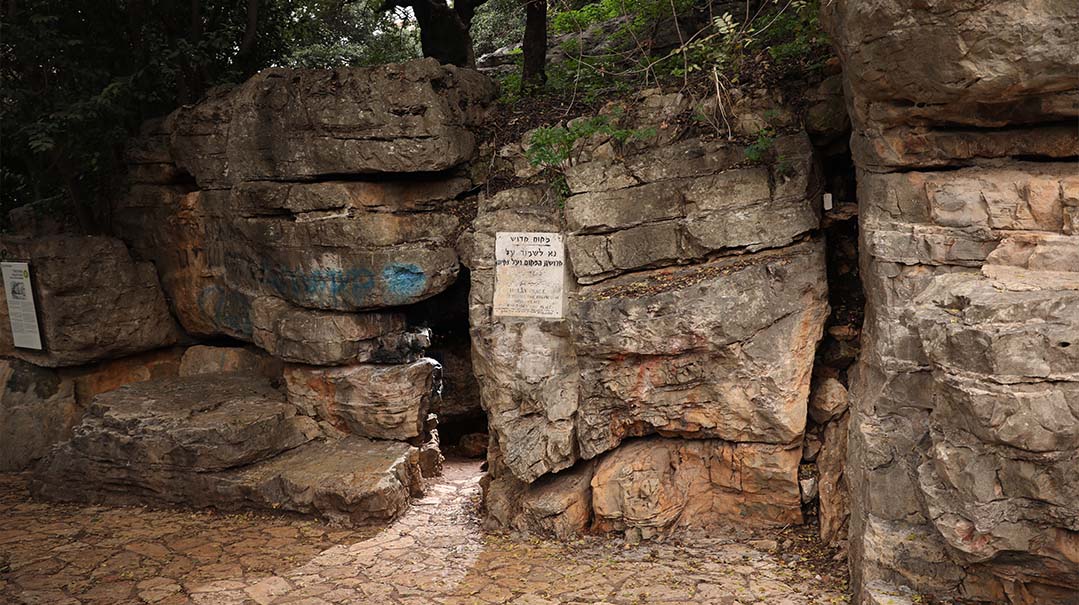
It is this unbroken Jewish tradition and life in the town that gives us precise knowledge about where Rabi Shimon’s cave is located. And wouldn’t you know it: As we descend the long staircase that brings us down to this holy cave, we see carobs all over. Various seismic shifts over time have changed the topography, so the cave today is more like a large crack between two rocks. The miraculous spring Rabi Shimon and his son drank from has also shifted down the hill because of the earthquake activity in the Galilee throughout the centuries. Yet there’s still a carob tree around the cave — the very spot where much of Rabi Shimon’s greatness in understanding the secrets of the Torah was achieved.
In the 1920s, Yitzchak Ben Tzvi, who would later become the second and longest-serving president of Israel, spent much time in the town researching its ancient origins. In his book She’ar Yashuv, he praises the lonely carob tree as a metaphor for the Jewish people in Peki’in and everywhere: “In their remote corner live the remnants of Jewish agricultural settlement that has persisted since ancient times, isolated and lonely like the ancient carob tree in whose shade they were sheltered. For hundreds of years they endured torture, and the hope of redemption and salvation did not leave them. It is a tree that symbolizes faith and perseverance throughout the generations.”
Create a free account to keep reading.