“The synagogue has great significance to the Jewish history of Boro Park, and also for the history of Brooklyn”
S
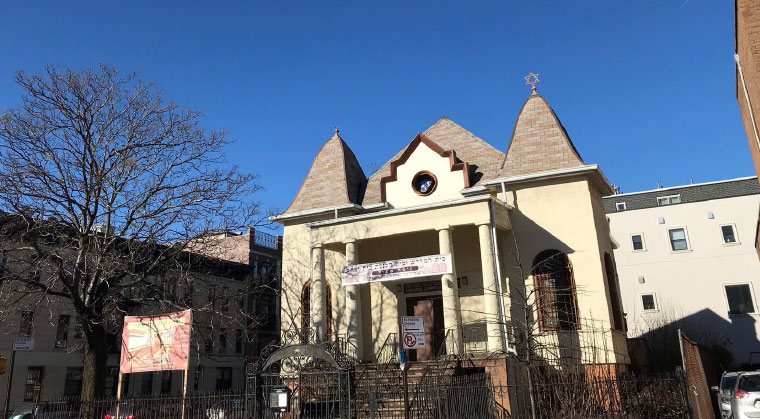
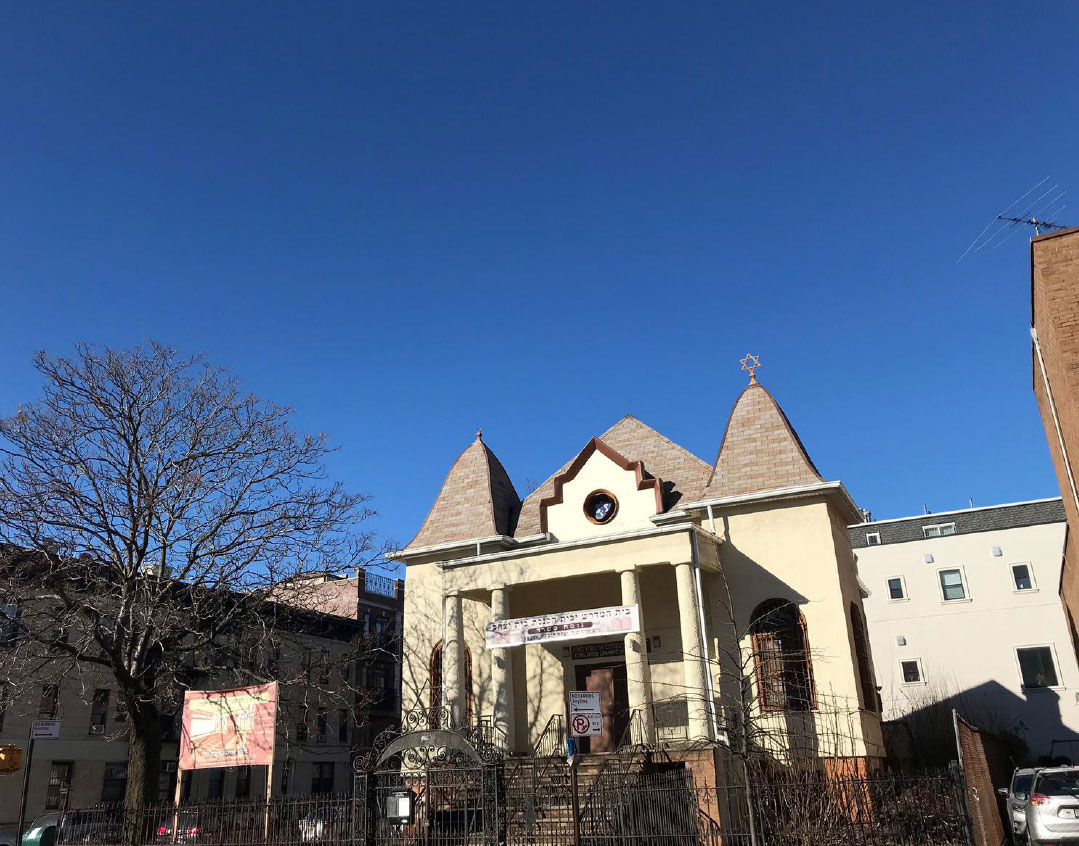
eeking landmark status for a building still in use is usually a headache that occupants would do anything to avoid. The legal designation brings in its wake a years-long bureaucratic process just to replace a window or add a wall. Yet one shul in Boro Park hopes obtaining that status from a New York City agency will be its lifeline from destruction.
Chevra Anshe Lubawitz is Boro Park’s oldest shul, and developers have a permit to raze the structure and rebuild it as a condominium apartment complex with space for a new shul. The petitioners, Joseph and Levi Goldberg, cite the shul’s tenement style and Moorish facade, as well as its status as the second-oldest building in the borough of Brooklyn to be built specifically as a shul.
“The synagogue has great significance to the Jewish history of Boro Park, and also for the history of Brooklyn,” the brothers write in an appeal to Sarah Carroll, chair of the Landmarks Preservation Commission, “and is believed to be the oldest undesignated purpose-built synagogue still in synagogue use in Brooklyn.”
The shul, built in 1906, has a dwindling membership from its heyday in the 1950s, when Joseph Goldberg recalled blowing shofar on Rosh Hashanah in a shul “packed from wall to wall with worshippers.”
Create a free account to keep reading.