Aside from the classic cantorial clothing he wears until this very day, Chazzan Moshe “Moishele” Kraus has worn many hats: that of a Munkaczer talmid basking in the warmth and greatness of the Minchas Elazar, and shockingly, just a few years later, that of an IDF officer. But wherever he has gone in his long and fruitful career, he has always been doing the same thing: regaling and uplifting Jews — great Torah leaders and children in Bergen-Belsen the same — with his mellifluous voice
It’s a regular feature at museums and fairs celebrating places and eras long gone: a little booth with costumes and props of the epoch. For a small fee, a photographer will snap a black-and-white photograph of a visitor sitting still, assuming the pose and expression of a hardened revolutionary or a dashing English royal.
But look closely at those pictures gracing photo albums or mantles, and you will find the giveaway, the clue that cries “fraud”: the slight embarrassment in the smile, the glasses that say 2010 even as the rest of the uniform says 1910, the small bump of a cell phone under the cape.
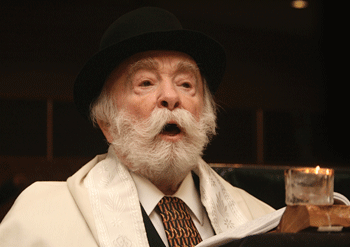
My first thought upon meeting Chazzan Moshe Kraus is that he looks as if he stepped off the set of a production celebrating prewar Hungarian Jewry. But on him, there are no giveaways, no signs that it’s not for real. To be sure, he wears the right clothes for the part: a round, black bowler hat crowns his face, his white mustache is curled at the edges, and instead of a knotted tie, he wears a cravat, the neck-cloth minus the knot.
But his eyes — eyes that are nostalgic and longing, eyes that still reflect the grandeur of the central shul, that bespeak the decorum and dignity of tefillah — tell you that he’s for real.
Create a free account to keep reading.