The Reading Room at the National Library of Israel (NLI) ishome to innumerable sets of Gemaras

After the Churban, when Klal Yisrael began their long exile, our Sages realized that Torah shebe’al peh (oral halachic transmission) was at risk, and halachah needed to be written to avoid getting lost. Rabi Yehuda Hanasi compiled the Mishnah around the year 200; 300 years later, Ravina and Rav Ashi compiled the Talmud.
Few handwritten manuscripts remain, for various reasons. For starters, Gemaras weren’t written for display; rather they were designed for daily use. A town might have only a few masechtos, shared by all, and however durable the parchment, constant use took its toll.
Another — tragic — reason we have few surviving copies: the Talmud was viewed as an existential threat to the reigning church. Christian leadership would frequently stage biased “debates” and “trials” of the Talmud, designed to prove which religion was the truth, and most, if not all, copies of the Talmud would be destroyed or heavily censored.
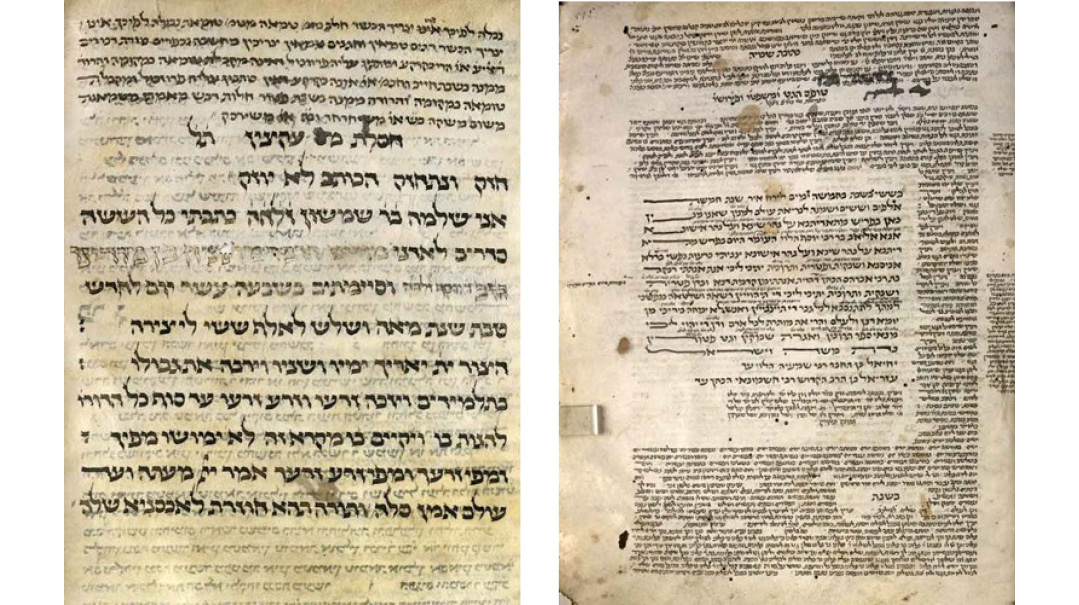
Photos: Bavarian State Library, the National Library of Israel.
“Ktiv” Project, the National Library of Israel
Create a free account to keep reading.