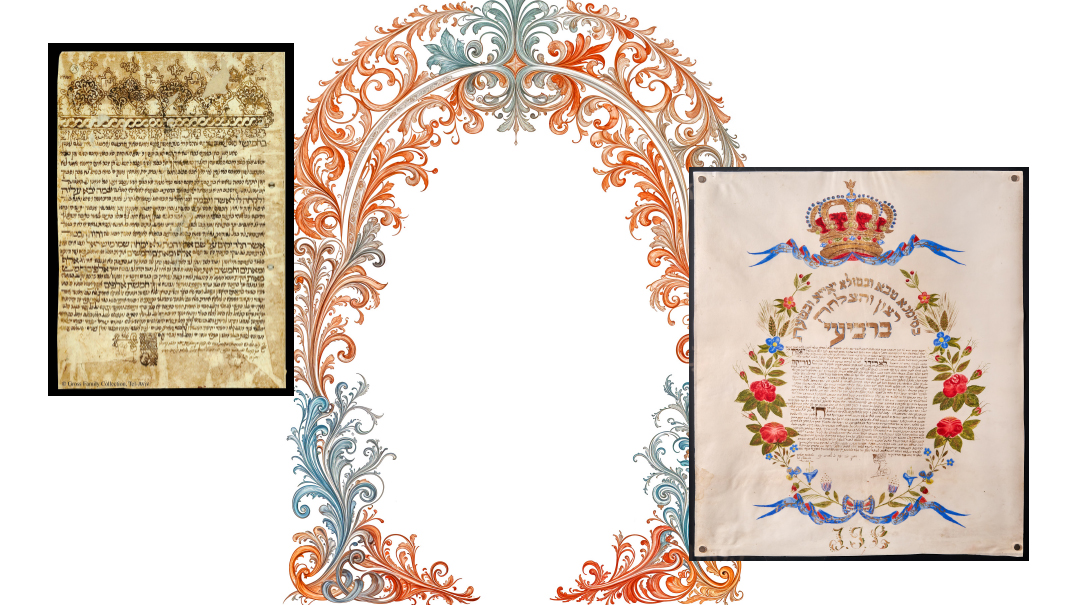
Magnificent illuminated kesubos came into their own over the last 500 years
It’s a binding agreement, setting out responsibilities and obligations of a new partnership. It’s a document protecting the monetary rights of women.
And it can also be a work of art, displayed on a couple’s living room wall or hanging in an art gallery or museum.
It’s a kesubah, the marriage contract first discussed two thousand years ago in the Talmud, and while it’s actually a technical document and not, as some assume, a promise of ardent dedication and commitment, it is until today the foundation of every Jewish home.
The National Library of Israel (NLI) owns or has online access to some 7,000 kesubos. The oldest kesubah in the collection, from Tyre, Lebanon, is dated 1023, just over 1,000 years ago. But kesubos go back much further. The Talmud in Shabbos 14b credits Shimon ben Shetach as the codifier of the kesubah, the marriage contract that sets out marital and financial responsibilities of the husband toward his wife.
Create a free account to keep reading.