The life, travels, and martyrdom of Rav Elchonon Wasserman
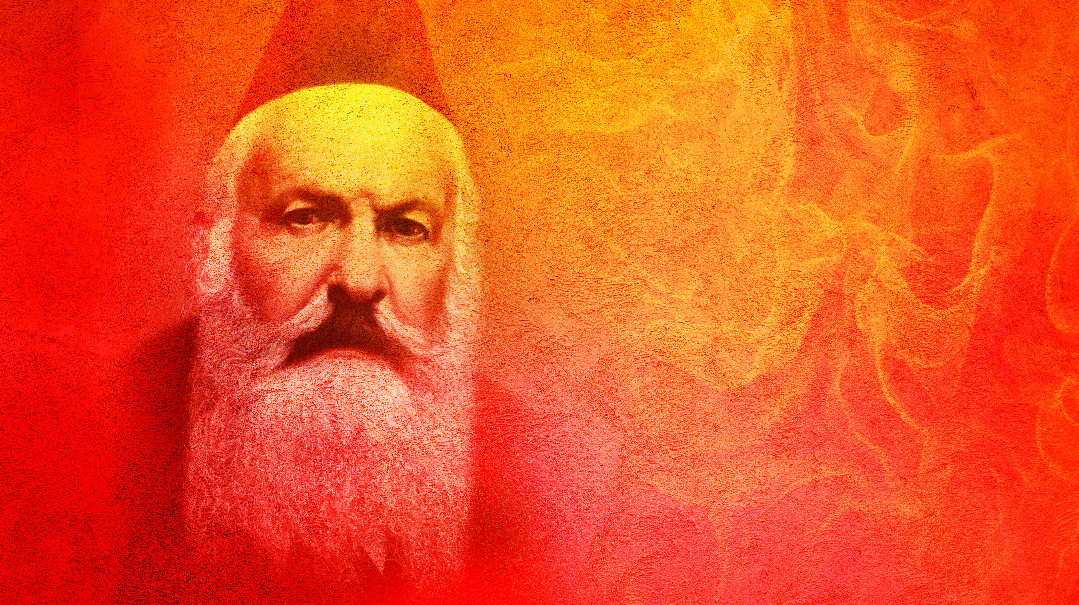
Illustration: Mikhail Chapiro/AhavArt
It was a bright fall Day in 1938 when Rav Elchonon Wasserman alighted from the overnight Pullman train in Denver’s Union Station. If any crowd awaited him at all, it was negligible. This suited him fine, for neither fanfare nor the healing Rocky Mountain air was what had brought him out to the great American west. The Torah leader was more than a year into a whirlwind journey across America to lift his yeshivah out of crushing debt. Though exhausted, he stood erect, refusing to allow his depleted state to affect his regal posture.
While the greater, primarily secular Denver Jewish community had little interest in “old world rabbis,” the local press had been alerted and a reporter from the Denver Post arranged a sit-down with Rav Elchonon. His traveling companion, Rav Shmuel Greineman, the menahel at Mesivta Tiferes Yerushalayim on New York’s Lower East Side, served as translator.
Most of America’s Jews did not quite recognize the epochal changes that their guest had wrought across Europe’s yeshivah world. Years earlier, Rav Elchonon had acted on the instructions of his lifelong mentor, the Chofetz Chaim, and revolutionized the concept of the modern yeshivah. In Baranovich Rav Elchonon built upon the foundations laid by Rav Chaim Volozhiner, father of the modern-day yeshivah, and brilliantly implemented the adjustments necessary for a world decimated by turmoil and increasing secularization. In Rav Elchonon’s view, lomdus — the complex analysis of textual minutiae — was important, but mastery and breadth — the consumption of vast tracts of knowledge — was to be paramount. He focused on younger bochurim, opening his yeshivah ketanah to students roughly equivalent to today’s high school boys, and the products of his yeshivah entered the great Torah centers armed with the proper learning skills and character traits to become enduring Torah scholars.
The reporter assigned to interview Rav Elchonon on that autumn day in Denver knew little about the educational revolution his subject had spearheaded. But he quickly realized that this interview was to be like none other he’d conducted. With the rabbi refusing to sit for a photo, the writer used words instead to capture him: he termed Rav Elchonon “The Jewish Einstein,” describing him as “clear-complexioned and bearded…. a remarkable prototype of the artistic conception of the Jewish patriarch.”
Create a free account to keep reading.