American Jews now found themselves caught between their desire to express solidarity with the nation and reverence for Lincoln, and the need to observe the traditions of their faith
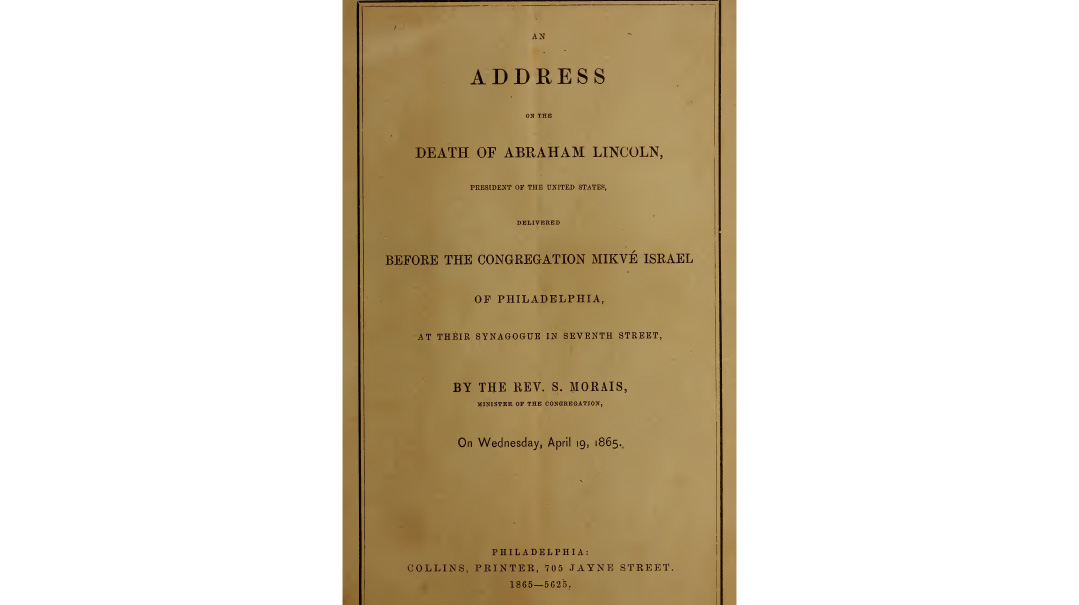
When President Lincoln was assassinated on Shabbos Chol Hamoed Pesach, rabbis across America were faced with the task of eulogizing the “Great Emancipator” with no advance notice. Those who held off until after Pesach were faced with a similar dilemma on Shavuos — the day of national mourning chosen by President Andrew Johnson
Murmurs of ill tidings circulated as Jews congregated at synagogues across America on the morning of Shabbos Chol Hamoed Pesach in 1865. The previous night, President Abraham Lincoln had been shot by John Wilkes Booth at Ford’s Theatre in Washington, D.C., and the disheartening news of his passing early that Saturday morning had just started to reverberate.
In response, newly sworn-in President Andrew Johnson called for a national day of mourning on May 25, which was to include gatherings in houses of worship to remember the late president. Christian clergy objected that it would coincide with their holiday of Ascension Day, so President Johnson agreed to postpone the commemoration to June 1.
A Proclamation
Whereas by my proclamation of the 25th day of next month was recommended as a day for special humiliation and prayer in consequence of the assassination of Abraham Lincoln, late President of the United States; but Whereas my attention has since been called to the fact that the day aforesaid is sacred to large numbers of Christians as one of rejoicing:
Create a free account to keep reading.