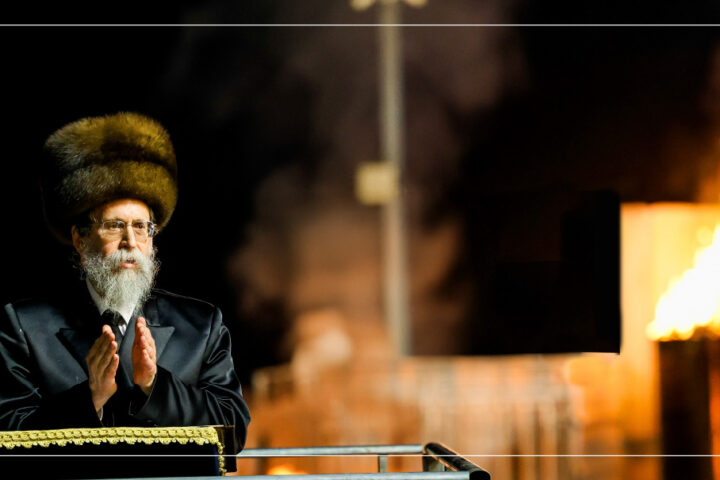
Half a century later, Rav Ovadiah Yosef’s sonRav Yitzchak Yosef navigates the same painful nexus of military and halachic loss

The psak — given for a few specific cases where irrefutable information was available (including that of Colonel Asaf Hamami Hy”d, commander of the Gaza Division’s Southern Brigade) — allows the families to sit shivah even without a body, as the bodies that have been identified are being held by Hamas in Gaza. But more important, it means granting the status of widowhood to the spouses of the deceased, freeing them from the status of agunah and allowing them to remarry.
For Rav Yitzchak Yosef, it was coming full circle. A generation before, in the fall of 1973, Rav Ovadiah Yosef, longtime av beis din and chief rabbi of Tel Aviv, had just been installed as the Rishon L’Tzion when the Yom Kippur War broke out, leaving 2,600 dead soldiers in its wake. Many were missing, and many others were unidentifiable — and Rav Ovadiah soon realized he was facing close to a thousand potential agunos — women who could not remarry as long as their husbands were not confirmed dead by all accounts.
The noise inside the IDF transport plane was deafening, the soldiers mercilessly shaken back and forth in their “seats” — actually, a netting of ropes attached to the interior walls of the aircraft. One of the passengers stood out from the olive-green crowd, and it was not just because of his clothes. Subjected to the same travel conditions as the soldiers, this middle-aged man with a black and gray beard was Rav Ovadiah Yosef, famed for his tremendous hasmadah and outstanding bekiyus, and the newly appointed Sephardic chief rabbi of Israel. He was busy encouraging the soldiers as he handed them each a small Tehillim inscribed with a personal dedication. Later, he would have to deal intensively with the tragic stories of many of these soldiers.
The Yom Kippur War broke out on October 6th, 1973, with the simultaneous invasions of Israel by Egypt in the south and Syria in the north. Israel had to fight on two fronts at the same time, in both the Golan Heights and Sinai.
Create a free account to keep reading.