With our dreams and decisions, we will still need to put in the work. Cultivating a vineyard is messy, backbreaking work
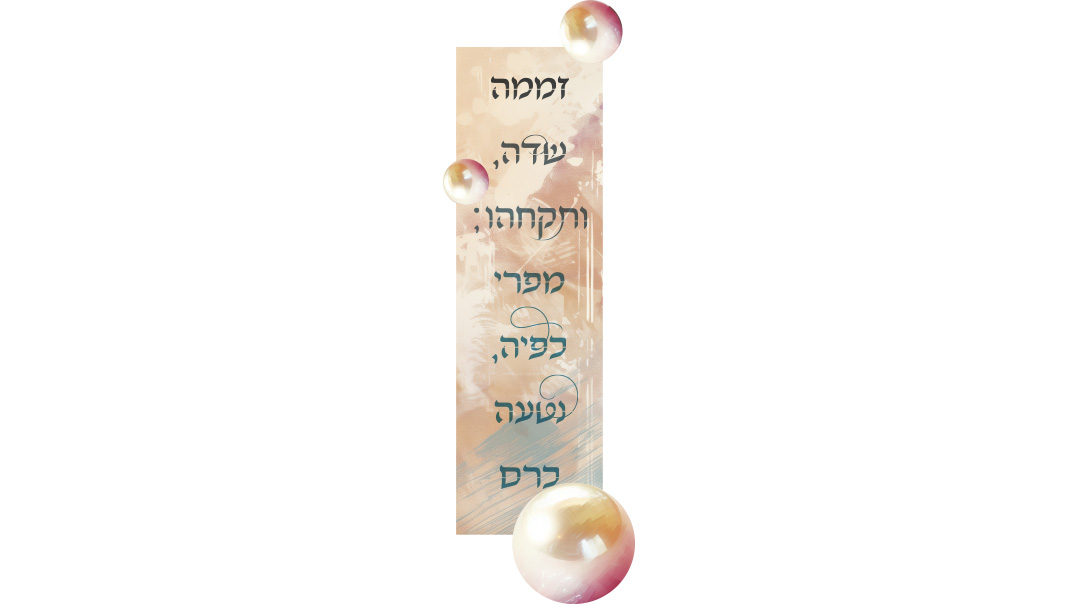
IN this pasuk, the eishes chayil looks at an empty field for sale, buys it, and transforms it into a vineyard.
How did she do this?
The eishes chayil was zamemah, strategic. When she saw potential, she acted. She had goals for herself and her family, and she evaluated purchasing the field against the criteria of her goals. Actualizing that vision took hard work. Mipri kapehah, from the labors of her hands, she turns a field into a kerem, a vineyard, something more valuable than what she’d initially acquired.
Rav Yosef Nachmias notes how far her vision extended. The word nata is written in the masculine form, but pronounced with feminine grammar. The text as written means he planted, but it’s read as “she planted.” The eishes chayil wasn’t a farmer. That was her husband’s domain. With her vision and foresight, she bought the field which gave her husband the opportunity to earn a parnassah and fulfill the mitzvos hateluyos ba’aretz. Because it was her vision, the pasuk attributes it to her.
This pasuk is teaching us that life isn’t supposed to be lived on autopilot. We can’t plan the trip called life if we don’t know where we’re heading. We each must dream and then plan strategically to see the greatness of which our family is capable.
Rebbetzin Neustadt a”h, in her beautiful sefer Mipninim Michrah, emphasizes that this dream must be grounded in our personal reality. Each family is unique. We can’t just do what everyone else is doing. We need to have goals and a vision for our home based on our own strengths and weaknesses and the actual personalities and needs of every family member.
Having a vision is just a start. Next comes the decisions. When we have a vision, we can choose when and how we say yes or no. I have a goal to teach Torah. That means when someone asked me to do business consulting, I said no. When Family First approached me to write this column, I said yes. When we say no to something, it means saying yes to something else. Knowing when we will say yes makes it easier to say no when we need to.
Create a free account to keep reading.