Jews in Alsace once accounted for more than half the French Jewish population. But emancipation, urbanization, and ultimately World War II nearly emptied the area of its Jews. Today, there are hundreds of shuls to visit, but very few Jews to meet. Ari and Ari set out to find what remained
Fifteen years ago, we were racing against time to track down various mesorahs relating to kosher birds before the old shochtim from various countries passed away and the traditions were lost. A series of phone calls and meetings led us to a French book of teshuvos by Rabbi Ernest (Simcha) Gugenheim. In his book, Les Portes de la Loi: Études et Responsa, he wrote that there is a solid tradition in the Alsace region of France regarding the kashrus of guinea fowl. At the time, our main concern was preserving the mesorahs, but in the back of our minds we always intended to travel to Alsace and find out more about this little-known Jewish community.
As it turned out, in many ways Rabbi Gugenheim (1916–1977) was typical of Alsace Jewry — he came from a small village called Westhoffen that had a Jewish presence dating back many centuries (in this case at least to 1626) and his family had lived in that region for many generations — at least 300 years. What was unusual, and might have played a role in Rabbi Gugenheim’s rise to lead French Jewry, was his decision to travel to Poland to learn in the Mir yeshivah at age 22, in 1938. Today, his son Rabbi Michel Gugenheim is chief rabbi of Paris.
Unlike generations of ancestors, Rabbi Ernest Gugenheim never held a rabbinical position in Alsace because, as we found out, the majority of Jews had begun to leave these picturesque country towns even before the great upheaval of World War II; today, there’s not a Jew to be found in most of the villages.
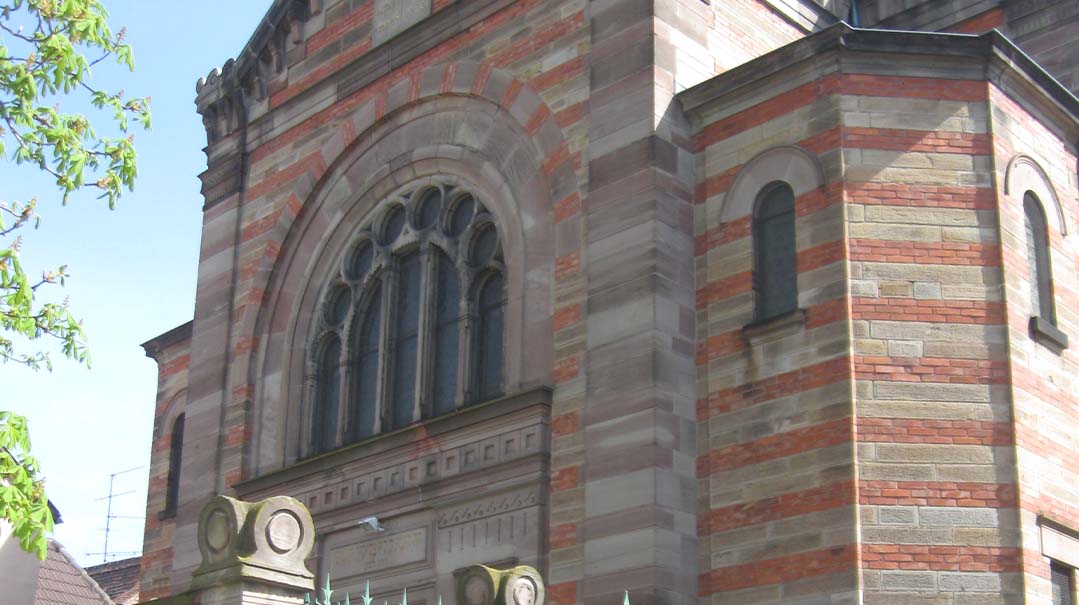
Alsace is located on France’s eastern border, on the west bank of the upper Rhine River, and is bounded by Germany and Switzerland. The strategic value of the area has resulted in its repeated annexation by competing countries of France and Germany, which greatly affected the situation of resident Jews. After the French Revolution, Jews were granted citizenship and by 1827, had achieved full rights. By 1871, there were 40,000 Jews in Alsace-Lorraine, roughly half of France’s Jewish population. It was during the early stages of the emancipation that shuls were built all over Alsace — 176 of them, in fact, between 1791 and 1914. But this building frenzy was followed by a mass exodus. Ultimately, emancipation, urbanization, and World War II largely emptied the region of Jews, leaving the situation of today: an area rich in Jewish history, but almost totally bereft of Jews.
Create a free account to keep reading.