GREAT READS → CONNECTIONS Issue 1069 · July 9, 2025

Who Asked You?

When my older daughter contributes to my conversations with my younger children, I wonder— is it her place to do so?
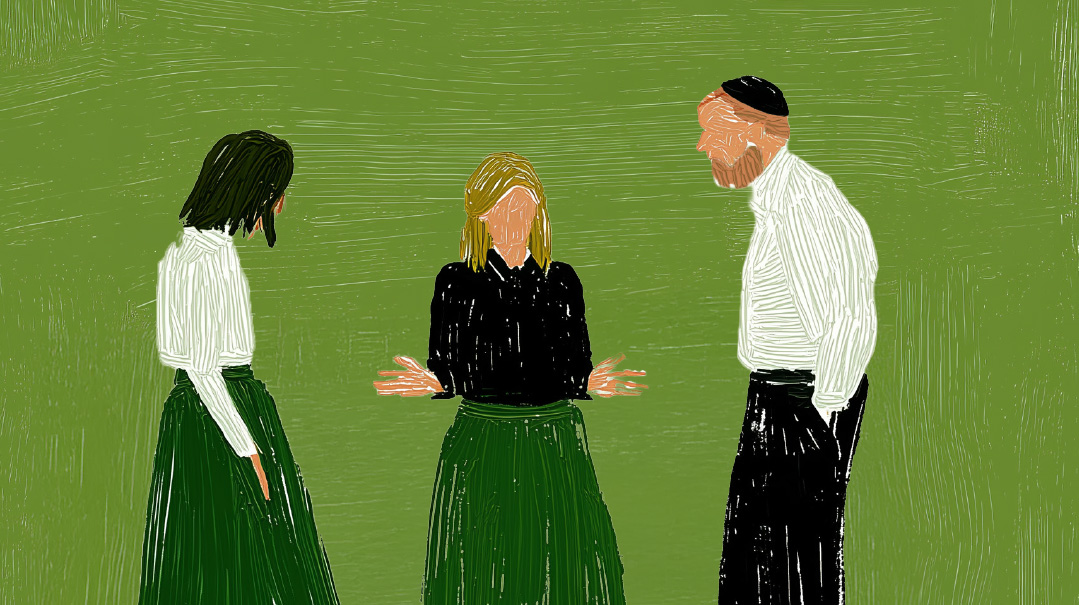
Who Asked You?

Q:

I’m a mother of a large family. I’ve always tried to foster an atmosphere where children can ask me whatever they want, and I try to be open and honest in my responses. However, I try to filter the responses according to the emotional capacity and age level of the child asking the question. Recently, a teenager of mine mentioned something about drugs. Then my nine-year-old, who was in the room, wanted to know what drugs are. I gave him some accurate but basic information and left it at that. Then my well-read 20-year-old daughter decided to expand his knowledge with an in-depth explanation of addiction. A similar scenario happened when the same nine-year-old – who has a tendency to worry — asked me what cancer is. I gave him a basic explanation and emphasized that these days, many people survive cancer. Then my daughter decided to add a detailed explanation of how cancer cells mutate and overtake the body. I don’t think it’s my daughter’s right to “enlighten” the younger children when I am there, providing information that I consciously craft to fit their needs and personality. Can I ask her to stop this habit and if so, how?

A:

I can definitely see how annoying it is to carefully create a developmentally appropriate answer only to have your daughter thoughtlessly expose your kids to inappropriate “extras.”

But let’s imagine it was your husband who had decided to pipe in. If you were to ask him to refrain from speaking, how do you think he’d feel? I know there are certainly some people who would angrily think, “What? Do I need your permission to speak in my own home to my own child?”

Now I’m sure you’re thinking: “A husband is different. This is my daughter. Doesn’t a mother have the right to ask her daughter not to interfere in her parenting?” In this column I’ve pointed out that a daughter doesn’t have the right to tell her mother how to parent. But this isn’t exactly what we’re talking about here. Your daughter isn’t directly telling you what you should or shouldn’t say to your kids. She’s just chiming in on a conversation that is in progress.

Of course, this is precisely your objection. Your nine-year-old is asking you the question, not your daughter. What right has she got to jump in with her comments?

Continue reading with Mishpacha.

Create a free account to keep reading.

Everything you need to stay close to Mishpacha.
← Previous installment The Labubu Collectors Next installment → Caught in a Cycle