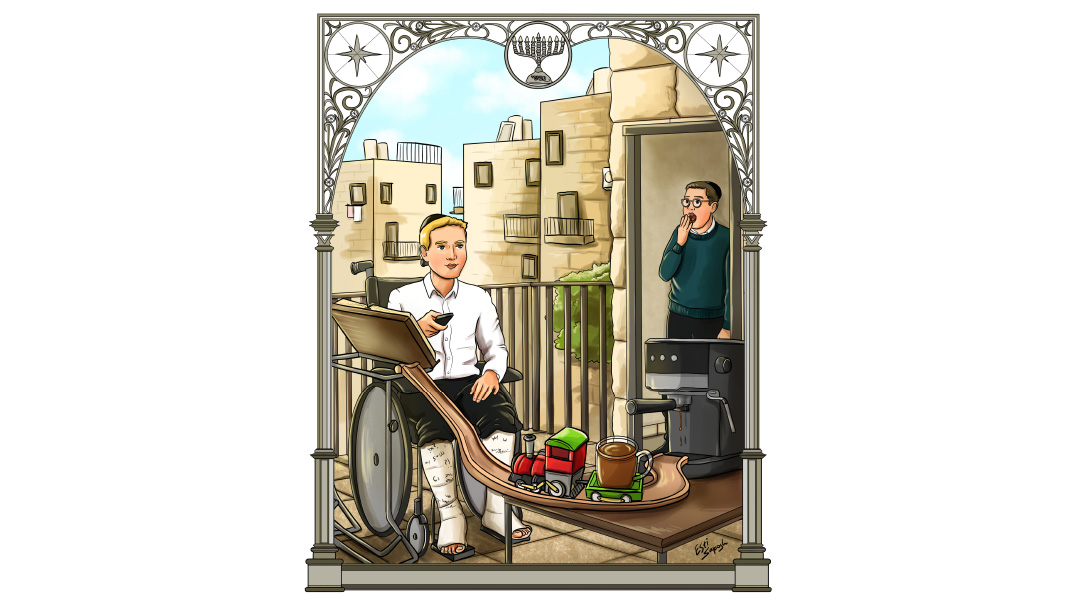
It is often hard to know when to help how much to help and when to not help at all. When is a person being kind to herself and when is she being kind to the one who needs her help?
Let’s imagine that Naftali’s mother is Shifra. Shifra is a “helper.” When Naftali forgets his lunch Shifra is happy to bring it to him. She has chosen to be a stay-at-home mother for just this sort of reason: to be available when her kids need her.
Let’s imagine another scenario. In this one Naftali’s mother is Adina. Adina is a worrier. When Naftali forgets his lunch Adina worries that he’ll be hungry and then she worries that he won’t be able to learn well in the afternoon. She interrupts her schedule during the day to bring him his lunch. It’s worth it for her — she’s afraid of the consequences of letting him go without food.
Now let’s imagine that Naftali’s mother is Ilana. Ilana’s middle name is “guilt.” She brings Naftali his lunch not because she wants to but because she would feel like a bad mother if she didn’t. She knows that good mothers don’t let their children starve. She resents Naftali for constantly forgetting to take his lunch but she feel she has no choice but to save him from himself. Even if it makes her feel stressed overwhelmed or exhausted she just can’t say “no.”
Create a free account to keep reading.