In the political crisis of the past four years, the Israeli president's job has become unexpectedly complicated
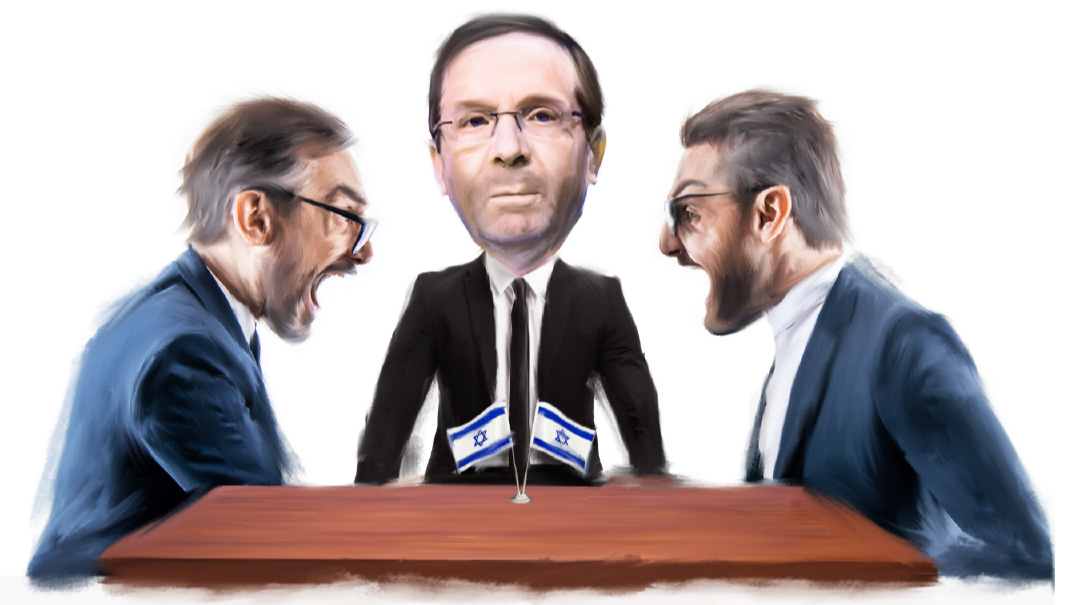
The Israeli president’s official residence may be this country’s one government building that most calls to mind the reserved splendor of the White House. After going through security, the visitor finds himself in an expansive, grassy garden, in the center of which stands a large table used for open air meetings.
This table has seen frequent use since President Herzog took office almost two years ago, with one guest in particular clouding the clear Jerusalem air with the fumes of his cigar. And to remove all doubt, the man making use of the ashtray was not the president, but Prime Minister Binyamin Netanyahu, a fan of white smoke.
In Israel, the president’s role is largely ceremonial, his primary function being to invite the winning candidate to form a government after an election. But in the political crisis of the past four years, that job became an unexpectedly complicated one. Herzog’s predecessor, longtime Likud member Reuven Rivlin, was suspected by members of his own camp of conspiring to bring down Netanyahu. Oddly enough, Isaac Herzog, a fixture of the Israeli left and a former chairman of the Labor Party, is perceived as far more objective, and was elected to the post by right-wing MKs, including Netanyahu.
Herzog is a moderate figure who has found himself at the heart of what is possibly the most complicated crisis in Israel’s history. His father, Chaim Herzog, whose bust is on display in the garden, never saw the like during his decade-long tenure.
Create a free account to keep reading.