The only path to viable legislation runs through agreements with the opposition on broad array of issues
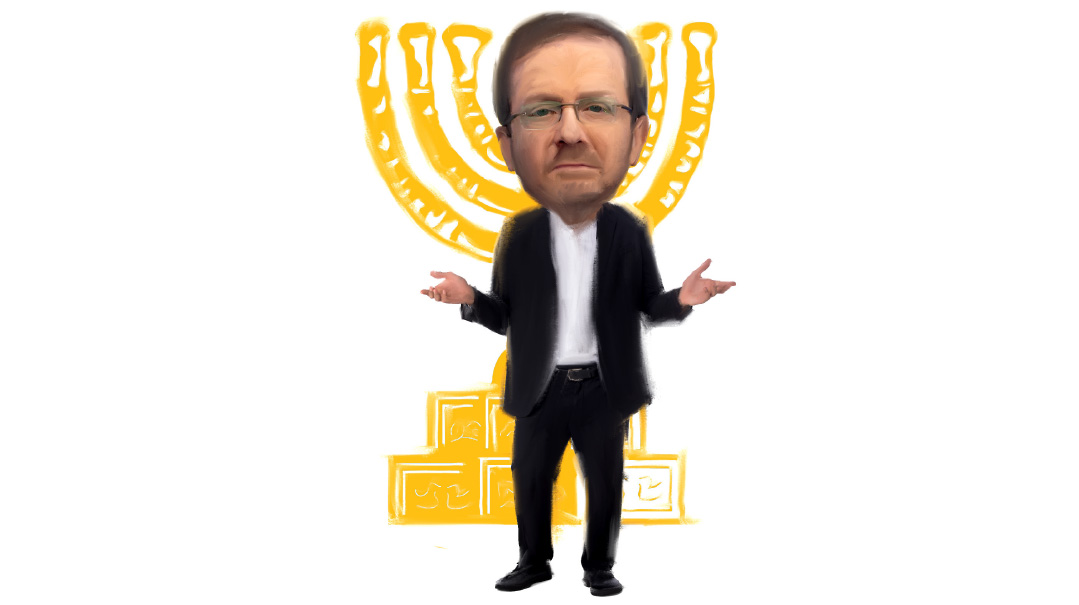
IN Beit Hanasi, the official presidential residence in Jerusalem, sits a Tel Avivian who’s as worried as he’s disappointed. President Yitzchak Herzog has recently renewed his efforts to mediate between the poles in Israeli society, this time setting his hopes on the chareidi parties — who increasingly see judicial reform as a distraction from the more important issue of the IDF draft law — as a moderating influence within the coalition.
With his long background in the law and politics, Herzog is a specialist at bridging differences, pinpointing the sweet spot for compromise, and plotting bypass roads around obstacles. His previous attempts to mediate may have fallen short; but Herzog isn’t one to let past failures get in the way. His 2015 election loss to Netanyahu, back when Herzog headed the Labor Party, proved merely a stepping stone to his 2021 election as president. The role of Israeli president is a position with minimal real responsibility. Legend tells of the time Ben-Gurion picked up the handkerchief of Chaim Weizmann, the nation’s first president, leading Weizmann to quip: “At least you’re leaving me the one thing I’m allowed to stick my nose into!”
But Herzog has used his background in politics to bring gravitas to the role. This was illustrated when Herzog was invited to address a joint session of Congress, even as Netanyahu has been locked out of Washington from the start of his sixth term.
One advantage of Herzog’s location is the proximity of living quarters to work space — rather like the White House. For Herzog, work is integrated with life. He hosts chareidi politicians in his salon for a kosher l’mehadrin lunch, opening their hearts over a glass of white wine.
Create a free account to keep reading.