“Ani Hashem, lo shanisi, I am Hashem, I have not changed” (Malachi 3:6). Hashem is the One absolute constant. His Torah, the expression of His Will, is likewise unchanging. Everything else is subject to shifting times, fads, and whims. Nothing in the world stays the same — it looks drastically different from how it did 1,000 years ago! But the “life source” of the world is its connection to one stable core.
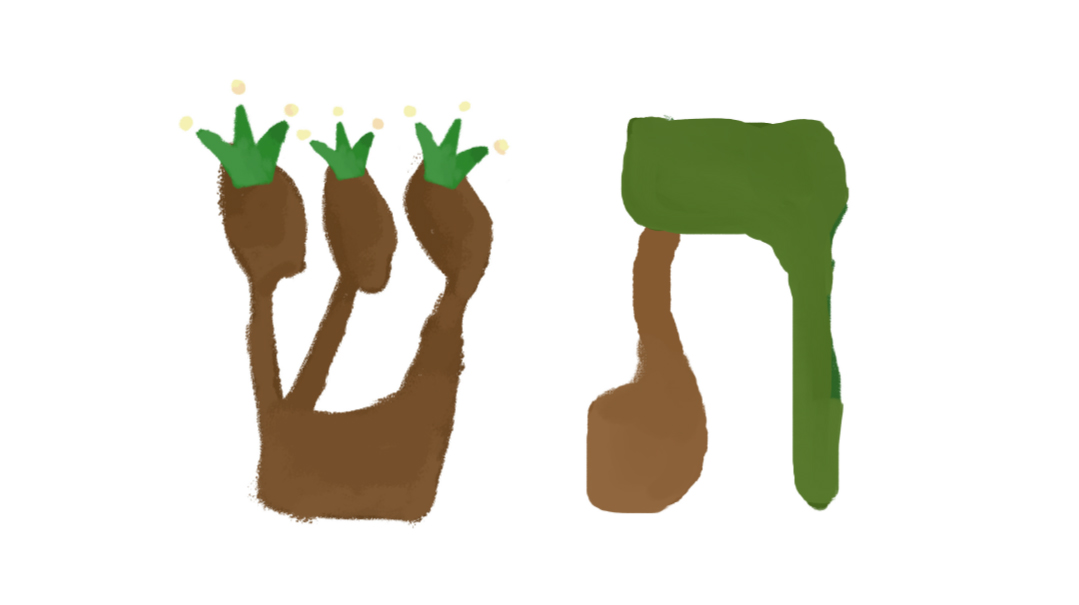
This relationship between constant and variable is similar to a flame flickering in a gentle breeze; sometimes the flame disappears for a moment. But the fire still burns, and so the flame reignites. This is the image of the shin, whose shape resembles a flame. The word for fire is aish, made up of the letters alef (signifying one Hashem) and shin, indicating an expansion stemming from the core. Even the sound of the shin is similar to a sizzling fire. When we stare into the eye of a flame, it should remind us that while circumstances feel shaky and unpredictable, our job is to maintain connection with the Source of our energy.
We go through a yearly cycle called shanah, in which each year is different from the last, as we constantly strive to make positive changes in our lives. The word “shin” can also mean “learn,” “sharp,” and “tooth.” What’s the connection between these words? Learning affects progress when the information is broken down into smaller pieces that are easier to swallow. Huge improvement can feel overwhelming; the secret to making change is through small steps.
The three branches of the letter shin represent two opposing forces — change and consistency and expansion and structure — and a meeting point. The right side of the letter is chesed, the middah of Avraham Avinu, and the left is gevurah, the middah of Yitzchak Avinu. The center is the synthesis of the two, tiferes (splendor), the harmony of Yaakov Avinu. The Maharal explains that the shin itself symbolizes two people, each coming with different approaches, who ultimately find shalom through compromise.
Create a free account to keep reading.