
Photo: CC BY-SA 4.0
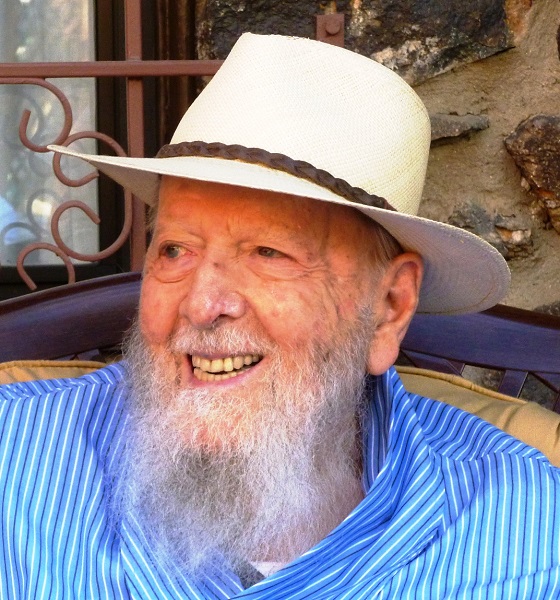
If a comprehensive account of kiruv in America is ever written, there’s one early pioneering effort that might easily be overlooked: the publication, 60 years ago, of This Is My G-d, the primer on Orthodox Judaism penned by the renowned Pulitzer Prize-winning author Herman Wouk, who passed away last month just short of his 104th birthday.
In a fascinating 2018 monograph, Touro College historian Zev Eleff tells the story of the book, which contains lessons that are still relevant to the American Jewish community today. Wouk was raised by observant parents and much influenced by his learned grandfather from Minsk. But in his twenties, he began working as a radio scriptwriter and drifted away from observance.
Eventually, he came under the influence of Rabbi Leo Jung, rabbi of The Jewish Center in Manhattan and an important mainstay of authentic Judaism in the first half of the 20th century. Wouk began accompanying the rabbi on his daily walk around the Central Park reservoir; through “hot days and cold, through sunshine, fog, snow and rain,” he wrote in a 1996 piece for Jewish Action, “we marched around the oval cinder path, enjoying the air and the view of the skyscrapers…. We talked at length, too, about the ideas and commitments of the Jewish faith.”
With World War II’s approach, Wouk went off to the Naval Academy and then did an extended tour of duty in the Pacific, keeping up a steady correspondence with Rabbi Jung. At one point, Rabbi Jung wrote to him that