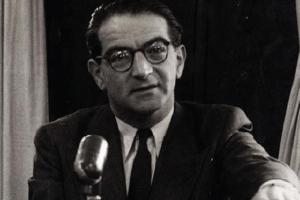
Back in Israel of the 1950s — when Rudolph Kasztner took the witness stand to defend himself against allegations of collusion with Adolf Eichmann in facilitating the mass murder of Hungary’s Jews — the heroes, the villains, and collaborators all seemed so obvious. But 70 years after his rescue transport pulled out of Budapest carrying 1,684 Jews to freedom, the only thing that’s obvious is that — whoever he was or wasn’t — what once seemed so black and white has with time morphed into many shades of gray.
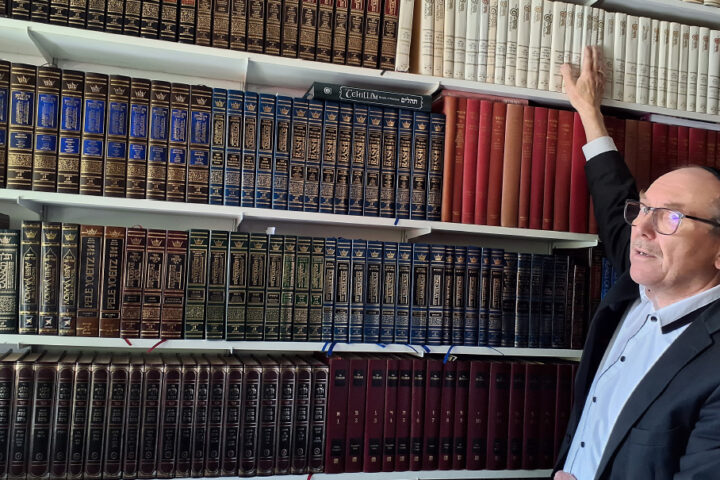
“My aunt Elsa ran an orphanage in Budapest, right next to the office of the Jewish Aid and Rescue Committee, known as the Vaada,” Rabbi Jungreis remembers. “One day Rudolph Kasztner, one of the Vaada heads, came up to her and told her he could save an entire transport of Jews and she should give him names.” Jacob Jungreis was one of the lucky ones. He, his parents, his brother, his sister (Rebbetzin Esther Jungreis), and his aunt with her orphans got on the list. The rest of his family was murdered — along with 437,000 Hungarian Jews deported to Auschwitz between March and August 1944, most of whom were killed upon arrival.
Rudolph Israel Kasztner — who Rabbi Jungreis credits with saving his life — was a jurist, journalist, and Zionist activist from Cluj (Klausenberg), Transylvania, who arrived in Budapest in 1940 after Transylvania was annexed by neighboring Hungary. Brilliant, arrogant, and gifted with nerves of steel, Kasztner — in his capacity as one of the leaders of the Zionist-affiliated Vaada — engaged in negotiations with Adolf Eichmann for the ransom of a certain number of Hungarian Jews after Germany invaded Hungary in 1944.
Kasztner, however, wasn’t the first to negotiate with the Nazis. Rav Michoel Ber Weissmandl, together with his Working Group in Slovakia, had been bribing Nazi officers since 1942, which succeeded in pushing off the Slovakian deportations for two years. Realizing Nazis were indeed bribable, Rav Weissmandl and his group began negotiations for the ill-fated “Europa Plan” which might have saved a million Jews for a ransom of three million dollars, had it not been thwarted by what Rav Weissmandl claimed were strong-arm tacticians within the Zionist leadership who moved in on the talks. In his book Min Hameitzar, Rav Weissmandl bemoaned the Zionist takeover of the negotiations, claiming the movement was not primarily interested in rescuing Europe’s Jews, but in saving their own leaders and like-minded activists who would go to Palestine and help build the Jewish state.
When the Europa Plan failed, Kasztner — who was involved in those talks and, having learned the art of bribery while still in Cluj in order to help Jewish refugees, moved freely within Nazi circles — pursued his own negotiations with Eichmann and the SS to save family, friends, and Zionist leaders. But while that group took up a little over 300 places, Kasztner opened his rescue train to what he later called a “Noah’s Ark” of Hungarian Jewry. Kasztner’s transport came to include those who would pay well for their places, orphans and others who would get on the transport for free, plus a contingent of rabbanim and many others whose places had been secured for a small fortune from the Orthodox community — including the Satmar Rebbe, Hungary’s chief dayan Rav Yonasan Steiff, and the Debrecener Rav Shlomo Tzvi Strasser.
Create a free account to keep reading.