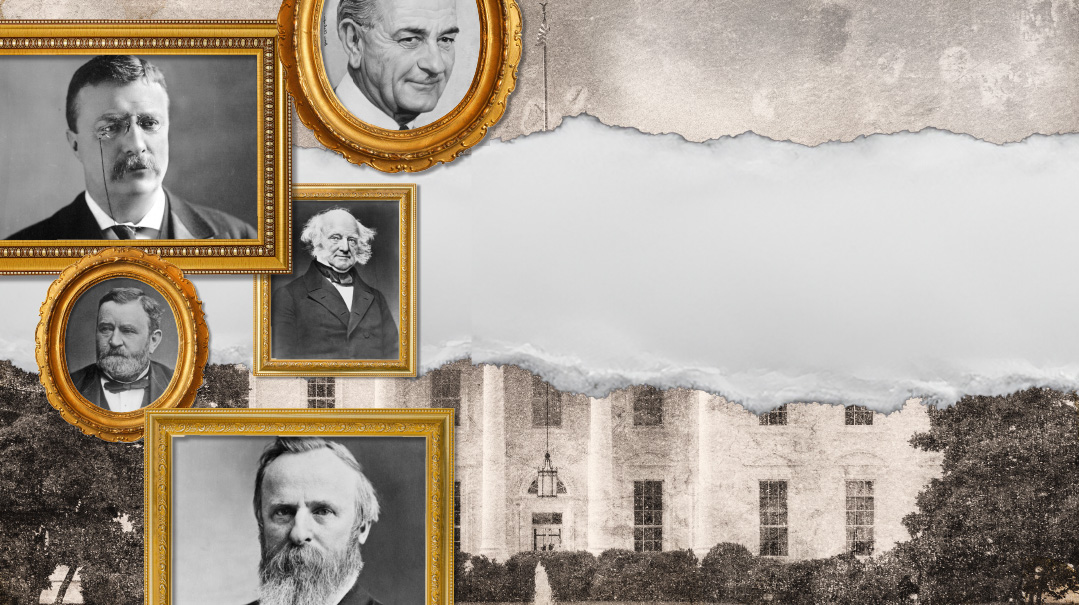
US presidents and their relationships with American Jews
ON February 5th, 1840, the Syrian Jewish community was thrown into peril when Father Thomas, an Italian monk, and his Muslim servant, Ibrahim Amara, disappeared in Damascus. Despite there being no evidence of the Jews’ involvement — in fact, historians think it’s more likely that Father Thomas was murdered by a local Turkish muleteer — the good citizens of Damascus could never lose an opportunity to scapegoat a Jew. Accusations of “blood matzos” spread rapidly (a common justification for many European blood libels), and thus began what became known as the Damascus affair. At the time, the city was governed by the (anti-Semitic) French consul, Ulysse de Ratti-Menton, who ordered a search of the Jewish quarter. While his hunt did not unearth any stored blood or bodies, Ulysse de Ratti-Menton was not about to let a small matter of literally no evidence get in the way of his convictions. A Jewish barber named Solomon Negrin was arbitrarily pulled off the street and tortured until he “confessed” that the monk had been killed in the house of David Harari — a wealthy member of the community — by seven Jews, who were rounded up before they could flee.
Meir Farhi, another wealthy Jew, was indicted in the disappearance of Ibrahim Amara. The Damascus authorities were furious that he escaped before they arrived to arrest him. Determined to drive him out of hiding, they began to whip his toddler son. After being forced to watch her son receive 300 lashes, and nearly bleed to death, a distraught Mrs. Farhi gave the authorities her husband’s location (along with a bribe for “humane” treatment), and he was promptly imprisoned.
In the interim, none of the seven “conspirators” in Father Thomas’s murder confessed, despite being tortured. Wanting a “confession,” as they still didn’t have any physical proof, Damascus authorities abducted 63 Jewish children (along with their mothers) and refused to release them until someone owned up. Aslan Farhi, a brother of Meir Farhi, confessed to the murder under torture.
While the Christians and Muslims had found their “murderers,” they still hadn’t located the bodies or the blood. Investigators eventually found some animal bones in the sewer, and claimed they belonged to Thomas and Amara. A local physician refused to certify that they were human bones and suggested they be forwarded to Europe for confirmation, but the French consul decided that would be too much effort — he had all the proof he needed.
Create a free account to keep reading.