Each morning, Mr. Market knocks onthe door and offers his stock at a different price.
W
hen I was in fifth grade, we played the stock market game. Each team of students was allotted an amount of money (this was not real money, much to my chagrin), and we competed against other elementary school teams to see who could make the most money over the course of a year in the stock market. I still remember our strategy. We opened up the newspaper with the stock quotes — in those days stock quotes could only be found in the newspaper — and we looked for the stocks that had the highest price and the highest percentage change the day before. The most expensive stock we found listed was Warren Buffett’s holding company, Berkshire Hathaway, then trading just north of $20,000 a share.
Unfortunately, we did not win the competition. Not even close. The winner was always the team that had students whose fathers worked in finance and provided some “insider information” (i.e., guidance) to their eager fifth-grade children. My team’s parents were doctors, and we would consistently land at the bottom. But I walked away from the competition with two lessons: I needed to find a better stockpicking strategy, and I needed to find out more about Berkshire Hathaway. As it turned out, both questions had the same answer.
Warren Buffett, chairman and CEO of Berkshire Hathaway, has already become a legend even for those outside the world of finance. But he attributed his core investment strategy to a lesser-known figure, someone outside the investment world, a man named Ben Graham.
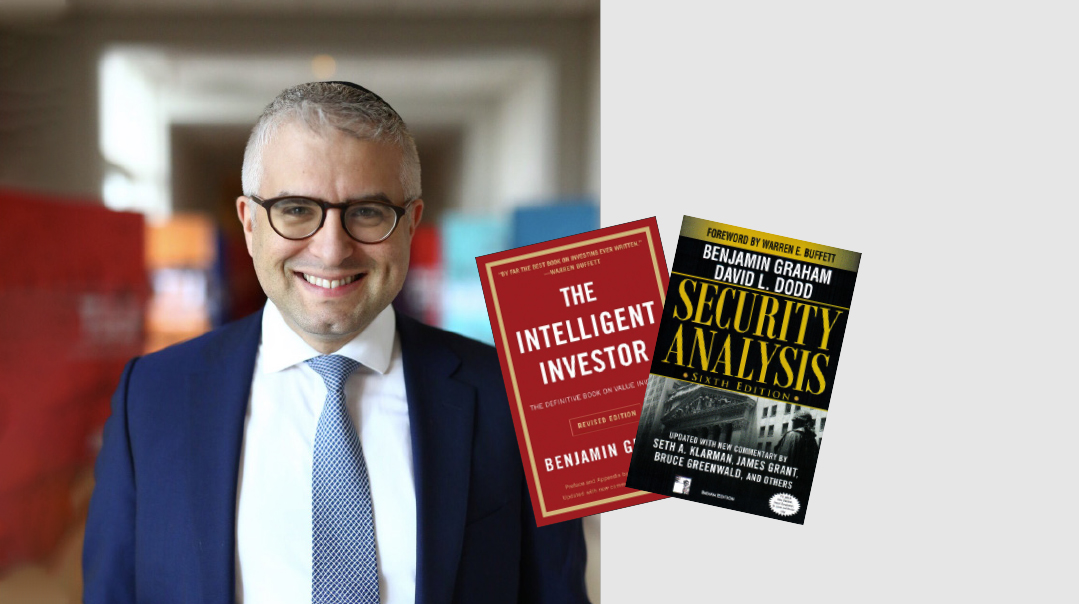
Mr. Graham taught Mr. Buffett in Columbia University and wrote two foundational books, Security Analysis (first published in 1934), which he wrote with David Dodd, and The Intelligent Investor (first published in 1949), both of which have become the bedrock for an investment approach known as value investing. The most important character in The Intelligent Investor is Mr. Market. Graham introduces a critical analogy to investment strategy that asks the reader to imagine a man showing up at his doorstep every morning. Known as Mr. Market, this man urges him to buy shares of his company. Each morning, Mr. Market knocks on the door and offers his stock at a different price. Sometimes it’s with excitement and enthusiasm, and sometimes Mr. Market seems depressed.
Create a free account to keep reading.