Each plan offered a glimmer of hope against the backdrop of closed doors and limited options for Jewish emigrants facing imminent peril
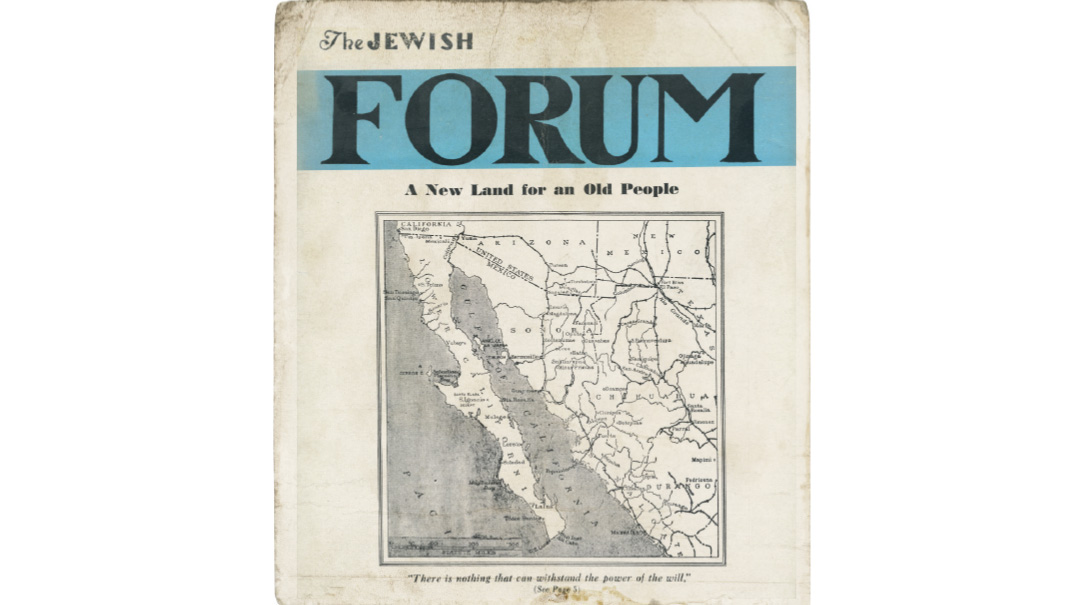
—Isaac Rosengarten, the Jewish Forum
IN 1938, as the sun set on the European continent for the Jewish People, and the darkness of impending war and virulent anti-Semitism encroached, a bold initiative was put forth in the hopeful pages of the Jewish Forum. It wasn’t just an ordinary rescue mission but a daring proposition to purchase or lease the region known as Baja California (“Lower California,” a Mexican territory south of the US state of California). The aim was to transform its vast wilderness into a sanctuary, a potential Jewish homeland where refugees could seek solace and security.
This ambitious plan was not hatched in isolation. In an era when Jewish activists desperately searched for safe havens, similar proposals had been envisaged for locations as diverse as Madagascar, Asiatic Russia, and the Kimberley region of Western Australia. Each plan offered a glimmer of hope against the backdrop of closed doors and limited options for Jewish emigrants facing imminent peril.
This Baja California project was the brainchild of Dr. George Richter, a member of the Committee of One Hundred, who first presented the plan in the Jewish Forum after visiting the arid landscapes of the area. Financing such a dream would require an international effort, possibly involving the kind of substantial backing that had supported American ventures like the purchase of Alaska. To kick off the initiative, Jewish Forum editor Isaac Rosengarten formed a group called Selah Inc. to raise funds and awareness.
In PR materials and countless articles, Rosengarten and others proposed developing Baja’s potential in agriculture, mining, and fisheries, to sustain the community. The pitch was poetic. In one editorial, Rosengarten wrote:
Create a free account to keep reading.