Clarinetist Moussa Berlin tunes up for another Lag B’omer on the bandstand
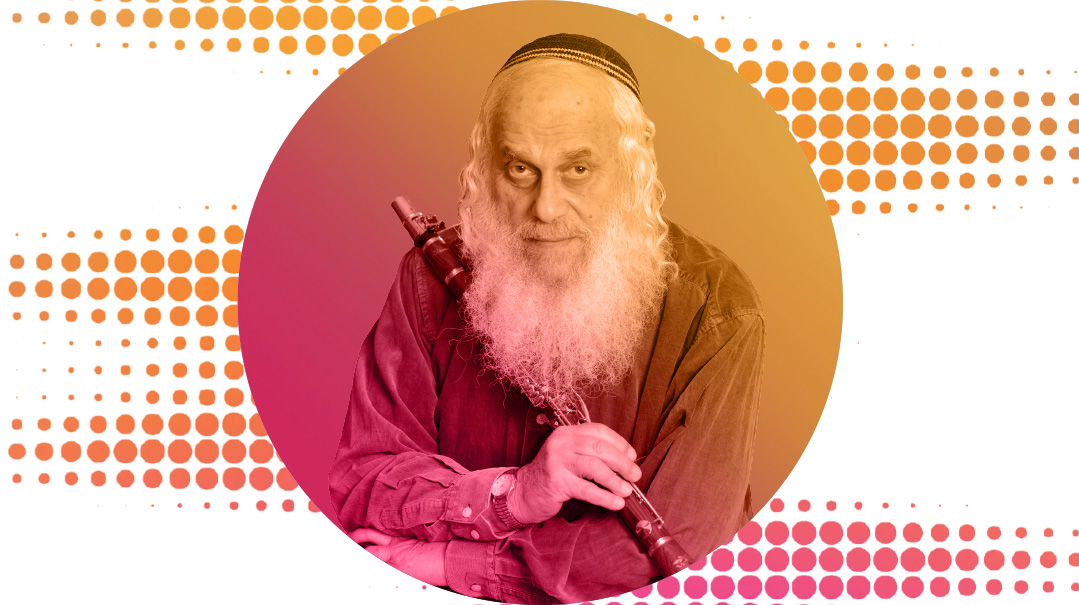
The first time I came to Meron on Lag B’omer was 71 years ago, in 1952. I was about bar mitzvah age and I can’t remember all the details of the visit, but it surely made a strong impression, because I’ve continued to go every year since. Around ten years later, once I was already playing clarinet, I joined the musicians on the bandstand, and in the 60 years since, playing at Meron has been a constant for me. I was entranced by the original Meron musicians of the 1950s, Avraham Segal and his family, who were an extremely musical bunch. Their instruments were only clarinet, drums, and cymbals, yet somehow, they played for 24 hours, more or less, without stopping.
The music they played depended on people’s requests. Back then, when someone wanted a certain niggun, he would come up to the bandstand and make a request, not by naming it, because those types of tunes did not have official names, but by singing it himself. He would then pay the musicians, and they’d play it, while he danced up a storm of joy and elevation. There were some niggunim that were very popular, and over the years, the niggunim were named according to those who regularly requested them, so that they became known as “Elenshtein’s niggun,” or “Shefer’s niggun.” Other than the few lirot the celebrants handed them, the Meron musicians weren’t paid, because no one had actually booked them. They were drawn there of their own accord.
Wherever Jews come from. There’s a lot of musical influence from Middle Eastern Jews. In the years gone by, the music of Turkish, Lebanese, and Iraqi Jews has come to Meron and has gotten added to the Meron playlist.
In the beginning, the other musicians were much older than I was, but by now, of course, I’m senior musician. I still play at Meron, but not for 24 hours straight. I have my corner and I play the traditional music, trying to keep the sound of tradition alive. Any changes I make have been gradual, not drastic modernization.
Create a free account to keep reading.