Akko might still have a reputation as a poor, rundown city, but the magic those old-time conquerors understood is still pounding on the rocks
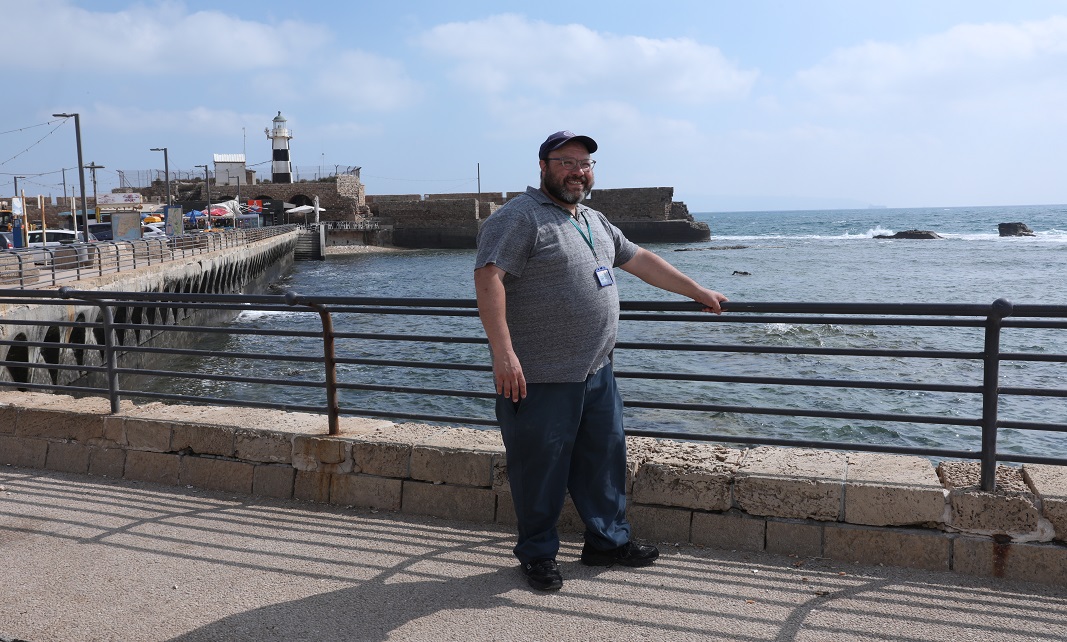
“What’s there to see in Akko?”ourists often ask me when I suggest a visit to this very underrated tourist city. The truth is, in the past I would probably have agreed with them — all I knew was that Akko was basically a slum city that really didn’t have much to offer the discerning frum tourist. It was rundown, with lots of mosques and churches and nary a mehadrin restaurant. So this ancient port city, the primary gateway to Eretz Yisrael for millennia — with its rich history, inspiring stories, and ancient cobblestones — patiently waited for her children to return and crown her with the honor and respect she deserves.
Today Akko is doubly recognized as a United Nations Educational, Scientific and Cultural Organization (UNESCO) World Heritage City, one of only a handful of UNESCO’s 1,100 sites worldwide to have that distinction. Israel itself — despite the fact that it’s a living history book — has only eight sites (of which Jerusalem, Chevron, and Kever Rachel are not included, as they are not recognized by the UN as being part of Israel). But UN ratings are not what draw frum tourists — they want history, inspiration, kedushah, and someplace to eat, and Akko has all of that and more.
It’s said that the name of the ancient city, on whose seawall the Mediterranean waves pound and crash, comes from the pasuk in Iyov (38:11) describing either Hashem’s commanding the limits of the ocean, or referring to the Mabul, as the Yerushalmi learns, saying “Ad poh — Until here you may come but no further.” “Ad poh” became the similar “ad koh” and thus, Akko got its name.
When Bnei Yisrael entered Eretz Yisrael, this was meant to be the inherited portion of the Tribe of Asher. Looking around as we enter the city and see the abundant olive trees, one can appreciate the realization of the brachos of Yaakov and Moshe to this shevet — that their bread should be rich with oil and their feet anointed with it. Asher, though, did not conquer this area in the end, and thus its status of kedushah, established by the first conquest in the times of Yehoshua, was unclear. It is for this reason, the Ramban suggests, that Rabi Abba, the great fourth-century Amora, would kiss the rocks of Akko upon arriving here and the Tanaim would depart from one another from this city. This was the gateway to and from chutz la’aretz — the Ellis Island of Eretz Yisrael — and its precious stones evoked the deepest emotions of coming home.
Create a free account to keep reading.