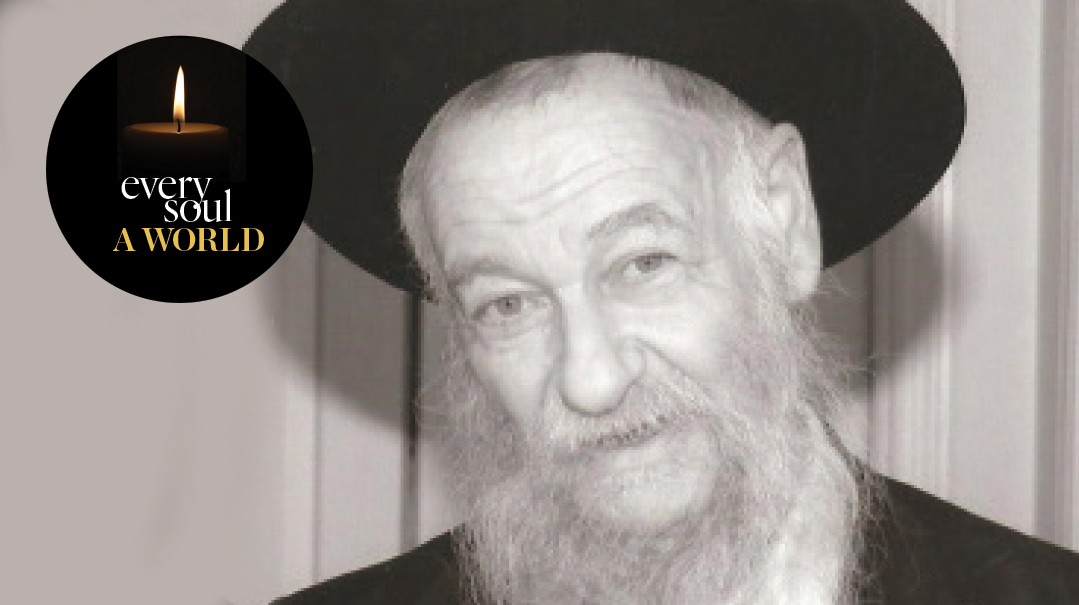
His approach was the furthest thing from preaching. Instead, you felt his desire to live life as a better human being. In Tribute to Rav Yehuda Jacobs
I

was 13 years old and living in Scranton, Pennsylvania when my mother remarried a special widower: the venerated mashgiach and unmatched baal eitzah of BMG, Rav Yehuda Jacobs. People say that when you get close to greatness you start to see the flaws. But I experienced the opposite.
I won’t pretend to understand or try to define the giant who became a father to me; I can only attempt to describe what I saw from my unique vantage point of a very great man.
Rabbi Jacobs – or as we called him, Tatty — was totally congruent. He saw himself as the most ordinary of people; the only difference being that he didn’t demand the ordinary amount of respect.
A lifelong talmid of Rav Aharon Kotler, his hallmark was commitment. He had an incredible sense of achrayus to Hashem, to Klal Yisrael, to his wife and children. He was always deeply thinking, always pondering the truths of life, aiming to achieve a deeper appreciation of everything important. For example, I once asked him what he was thinking about. “Yehei shmei rabbah,” he told me. “When we say ‘rabbah,’ what picture comes to mind? Does it in any way reflect the greatness of Hashem’s name? How great is that name?”
Create a free account to keep reading.