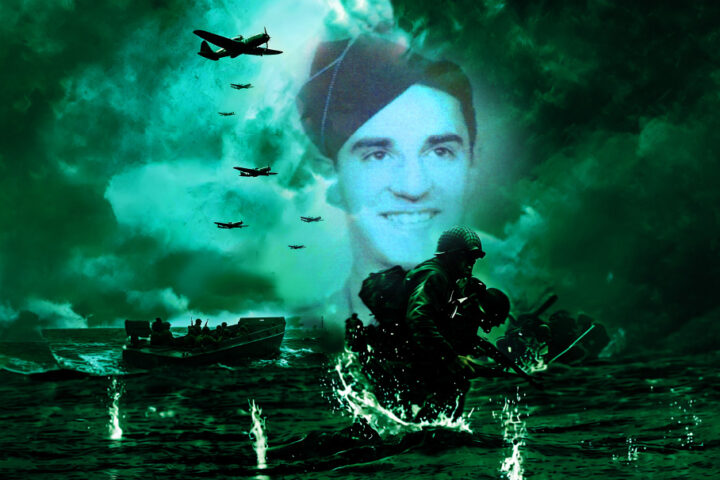
We’re made up of different parts; it’s our child parts that are treated in therapy

IN order to understand “the therapy client,” we need to first understand “the human being.” A human being isn’t a singular unit. The popular therapies of today acknowledge this reality, referring to the various “parts” of the personality, as did earlier therapies that referred to internal schemas, sub-personalities, ego states, voices, and more.
The simplest way of looking at a parts model of personality is to imagine that each of us is a bus. One part of us sits in the driver’s seat and calls herself “I” as in, “I feel lonely; I think I’ll call a friend.” The other parts of us sit in the passenger section. These parts are of all different ages — some babies, some kids, some teens, some adults, and some older, wise archetypes. Some of these passengers are troubled characters, while others are healthy resources.
The interesting thing is that any one of these parts can hop into the driver’s seat of the bus. As long as an adult part is the one who does this, the driver will be able to reach the steering wheel, brake, and gas pedal, as well as read a map in order to get the bus to its scheduled destination.
But when a young child part ends up in the driver’s seat, the bus won’t be getting very far. Indeed, since the youngster can’t read a map, steer, or reach the pedals, it’s quite likely that the bus will crash into walls or get stuck in the mud. If a teen part ends up in that seat, it’s likely that the bus will go somewhere — but not necessarily where it’s supposed to go!
Create a free account to keep reading.