As doors slam shut on Caracas, Venezuela’s Jews come to grips with their country’s mounting isolation
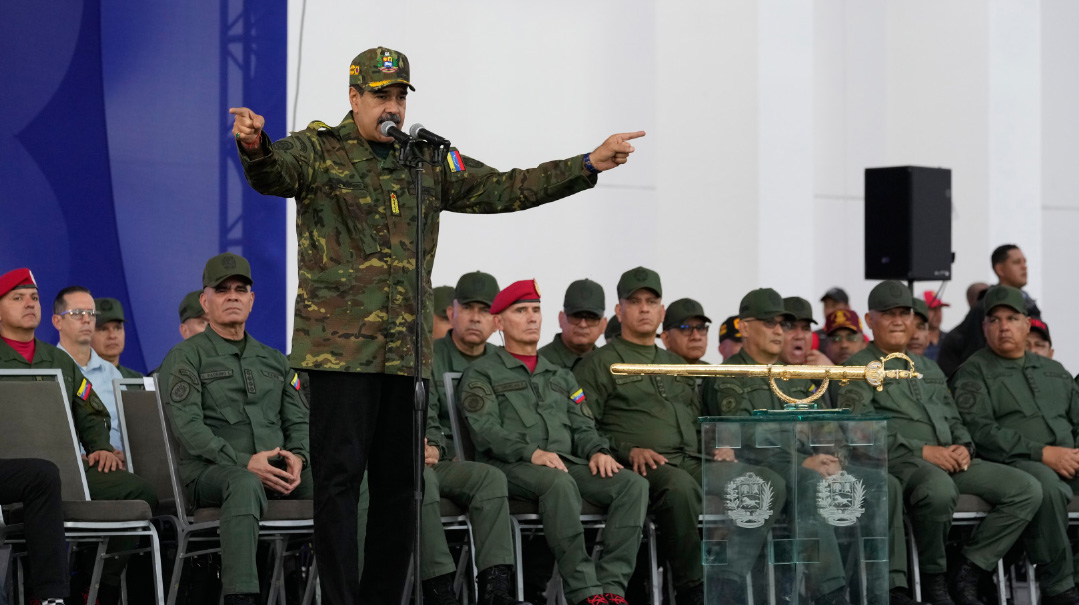
If there is ultimately a change of regime, it’s reasonable to expect that China’s bargain price on Venezuelan oil would go up. Could that trigger a new chapter in the trade war between Trump and Xi? We’ll have to wait and see…
Argentina’s president, Javier Milei, has managed to capture the imagination of Jews around the world — and Israelis in particular — with an enthusiasm rarely seen in contemporary politics. It is not every day that a head of state is seen weeping at the Western Wall, dropping in on a late-night shiur at the Ohel in New York, or quoting passages from the weekly parshah in official speeches.
Yet the initiative he unveiled in recent days aims for something more enduring than emotional symbolism. Inspired by the “Abraham Accords” championed by his political idol, Donald Trump, Milei announced — during the visit of Israel’s Foreign Minister Gideon Saar — that Argentina will spearhead what he calls the “Isaac Accords,” a Latin American parallel to the normalization agreements signed by several Arab states. Here are four things worth knowing about the project.
The challenge for the ambitiously titled “Isaac Accords” is to become something more than a diplomatic label. The initiative seeks tangible outcomes on two fronts. First, there are the political and economic dimensions: cooperation in technology, cyber-defense, agriculture, energy, and natural resources. Put simply, Israel brings technological prowess; Latin America brings raw potential. But there is also an ideological component — one that appeals deeply to Milei. He envisions a regional coalition of leaders openly supporting Israel, confronting anti-Semitism, and rejecting terrorist ideologies.
Create a free account to keep reading.