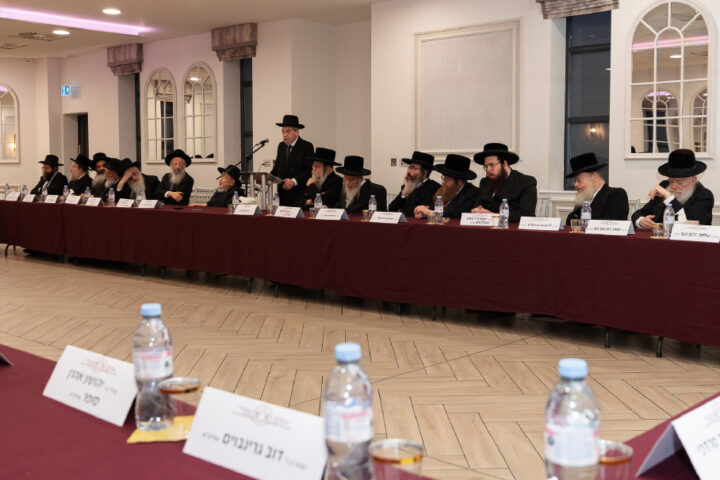
“The express minyan.” Bochurim run the whole thing, and their primary goal seems to be getting in and out in record time

Although some may assume that becoming a chinuch podcaster or Mishpacha writer comes with a touch of nevuah, I regret to report that prophecy is not included in the job description. I can’t predict what your son’s lifelong relationship with tefillah will look like, nor whether he’ll continue davening at these quicker minyanim.
I do feel qualified, however, to share that in a situation where a teenager is getting up on his own and going to a minyan (even one that moves a bit faster), it’s hard to imagine a parent saying, “You can’t go to that minyan — you must attend the adult one instead,” and thinking that will be effective chinuch. If the goal is to nurture a connection to tefillah, forbidding him from going to a minyan he’s chosen (and is actually attending!) is unlikely to accomplish much.
But don’t worry! There’s another path you can take to influence his relationship with davening. A harder but a much more powerful one. It’s the path of modeling. If we want our children to value tefillah, the most impactful thing we can do is work on our own relationship with it. Ultimately, children don’t develop meaningful values from our words alone. Rather, they absorb values by watching how we live.
Sadly, tefillah doesn’t always enjoy the best PR in our communities. We say things like “I had to grab a minyan,” or we kvetch about how long davening took, how the chazzan dragged, or how the drashah was boring. Often, our kids are exposed to adults who speak about minyan as an obligation, or worse, a burden, rather than as a treasured opportunity to stand before our Father in Heaven.
Create a free account to keep reading.