Eli Cobin’s name isn't only synonymous with the camera lens. As summer fades into Succos, he becomes “Cobin of Cobin Lulavim”
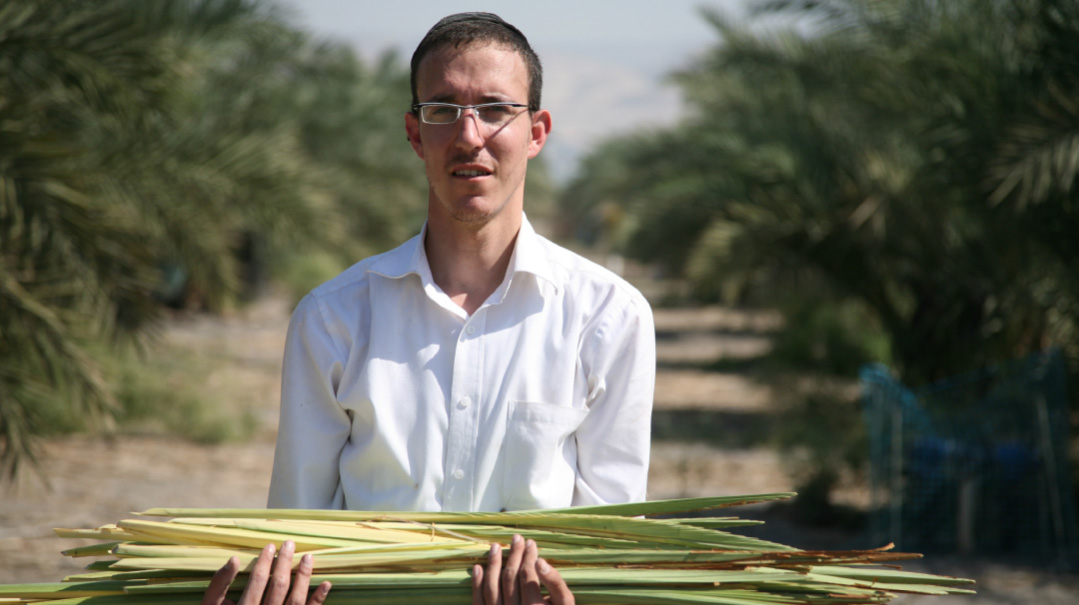
Cobin Lulavim, founded by Eli’s father, Reb Shabsai Cobin, was the first distributor to sell the Deri lulav to the masses. Today, the Deri lulav — a beautiful, strong, green, and mehudar specimen — is the prime choice of virtually every Ashkenazi in Israel. “But back in the day,” Eli says, “only rabbanim had mehudar lulavim.”
Eli rattles off some lulav facts like he’s done it a thousand times before. Which he has. “The Rema rules (Orach Chaim 645:3) that l’chatchilah it’s best to have a tightly closed lulav — the tiyomes (the center leaf) shouldn’t be even slightly open — but there were few lulavim available in Europe, and it was almost impossible to find a truly mehudar lulav. Faced with little choice, people tried at most to buy a lulav that was straight and not open enough to make it passul; a tightly closed tiyomes was a luxury they couldn’t dream of.”
When the Brisker Rav arrived in Yerushalayim, word spread of his insistence on using only a tightly-closed lulav. That’s why people call a closed, green, not-sunburned specimen a “Brisker lulav.” It would be more accurately termed a Rema lulav, but it was the Brisker Rav who made it the standard.
In order to ensure the middle leaf is truly closed of its own accord and not simply held together by the outer layer, the Brisker Rav used to inspect lulavim by peeling off the kora, the brown bark-like substance that grows around the lulav. The exacting standard set by the Brisker Rav led to considerable turmoil: People began looking for closed green lulavim without any signs of sunburn, and not covered by any brown kora.
Create a free account to keep reading.