Ari & Ari meet the Hebrew-speaking spiritual seekers of Ivory Coast
Conjure up a country that characterizes deep, dark Africa, and you might come up with the former French colony called Côte d’Ivoire, or Ivory Coast. Located at the bottom of Africa’s western land extension with its southern border on the Atlantic Ocean, the country is full of impenetrable rain forests that are home to monkeys and baboons, snakes and panthers. Although Ivory Coast is named for the former lucrative ivory trade, today there are few elephants left in these parts (although another huge mammal, the blue whale, can be seen off its coast). But while tusks are no longer making traders rich, the country is known as the cocoa bean capital of the world. (And isn’t that easier than chasing down a herd of elephants?)
This relatively small country, about half the size of Texas, produces over 2,000,000 tons of cocoa beans annually, about 40% of the world’s entire production. Yet while its economy is growing, most natives live in poverty — with life expectancy in the 40s and infant mortality more than 100 per 1000 live births.
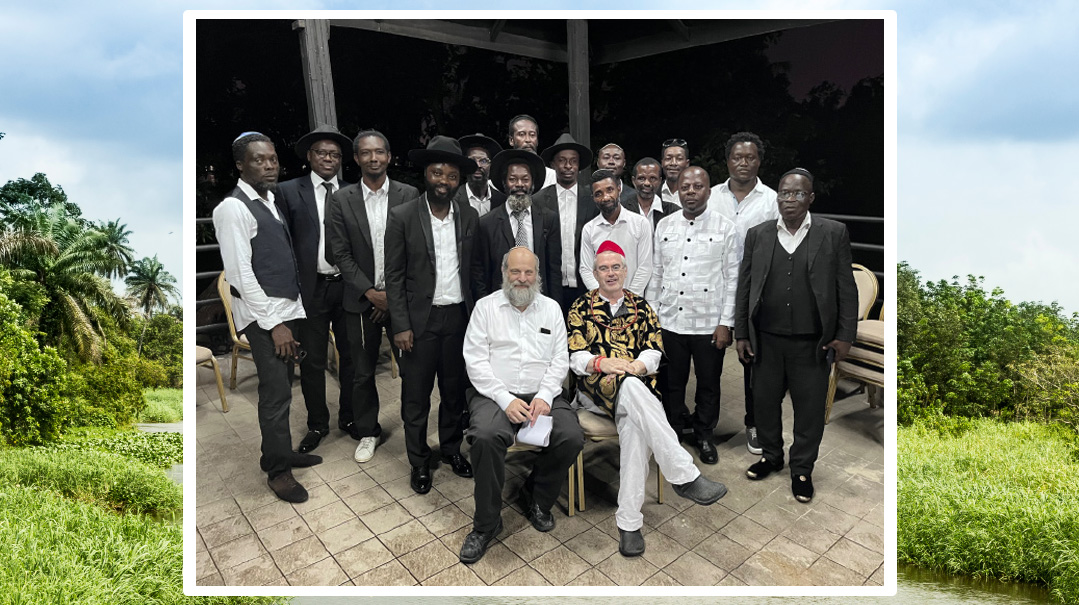
Now, we like chocolate as much as the next person, but cocoa beans alone wouldn’t be enough to get us here: Instead, we came to meet an emerging Jewish-affiliated community, one of several that have been popping up — seemingly out of nowhere — all over the African continent over the last years. But we couldn’t help wondering why would native Africans, so culturally far from the Masoretic tradition, choose this foreign lifestyle with all the restrictions and historical challenges it entails?
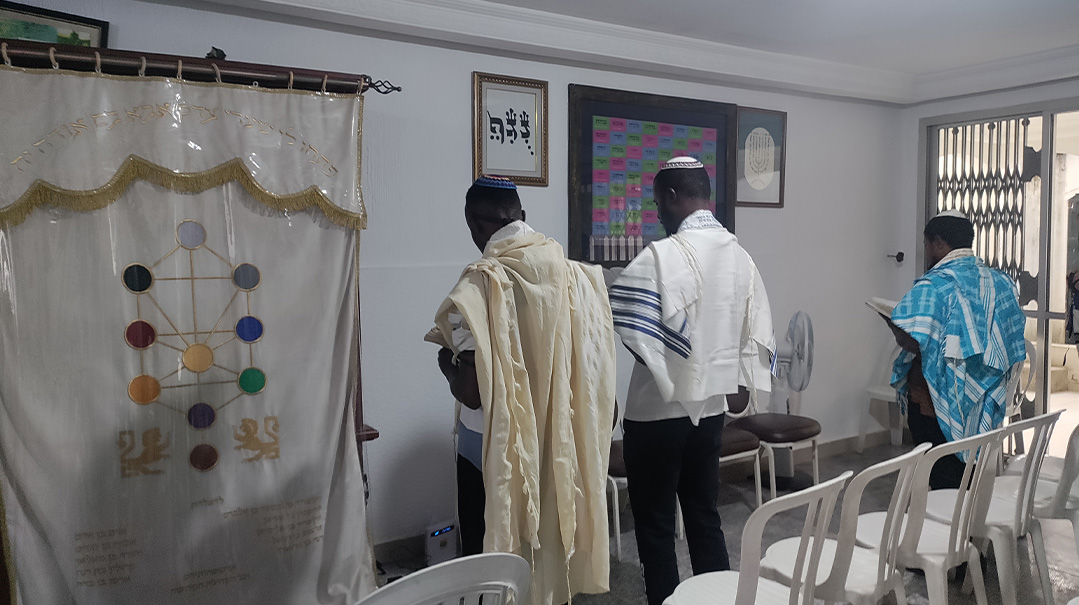
Our contact on the ground was Professor Yehuda (Firmin) Ahoua, who’s been leading Ivory Coast’s small Jewish-practicing community since 2001, consisting of both local people and occasional Israeli visitors (for whom, ironically, it’s sometimes their first religious connection). We spoke to Yehuda before we arrived and asked him what we could bring him. His answer was instant and revealing: “We need two platot for Shabbat and a hot water urn — these items can’t be found here.” Well, after hearing that, we knew one thing: This group wanted to operate within the boundaries of halachah. We were curious to understand how that happened, considering there has never been an organized Jewish presence in the country.
Create a free account to keep reading.