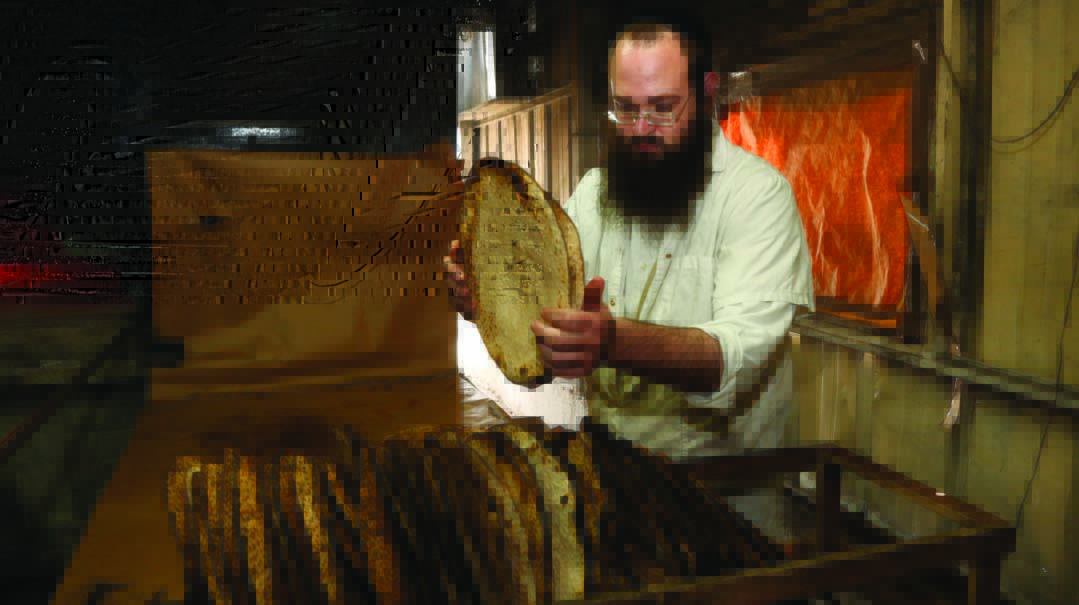
Years ago, I was manufacturing car parts. But when NAFTA (North American Free Trade Agreement) was signed, Mexican competition brought prices way down, and the company closed. I had a large family to support, and I couldn’t afford to be unemployed. In the past I’d volunteered in a matzah bakery, and I thought it might be a good parnassah.
We start in July/August, combing Canada for wheat; that process can be more stressful than production. Once we’ve found the wheat harvest that we want, we bring it to the factory to clean and mill it. By Rosh Hashanah, I’m looking for workers, and then production takes roughly 20-24 weeks during the winter.
A single season alone takes about 40-50 people working 700-800 hours. We work 8:30-5:00 five days a week, and right before Pesach we’re making matzahs round the clock. After Pesach, it takes a few weeks to close up shop.
Labor is too expensive, and the profit margin is too small to have any leftovers, so we work accordingly. If we see we’re likely to have leftovers, we’ll stop production. I don’t remember the last time that happened.
Create a free account to keep reading.